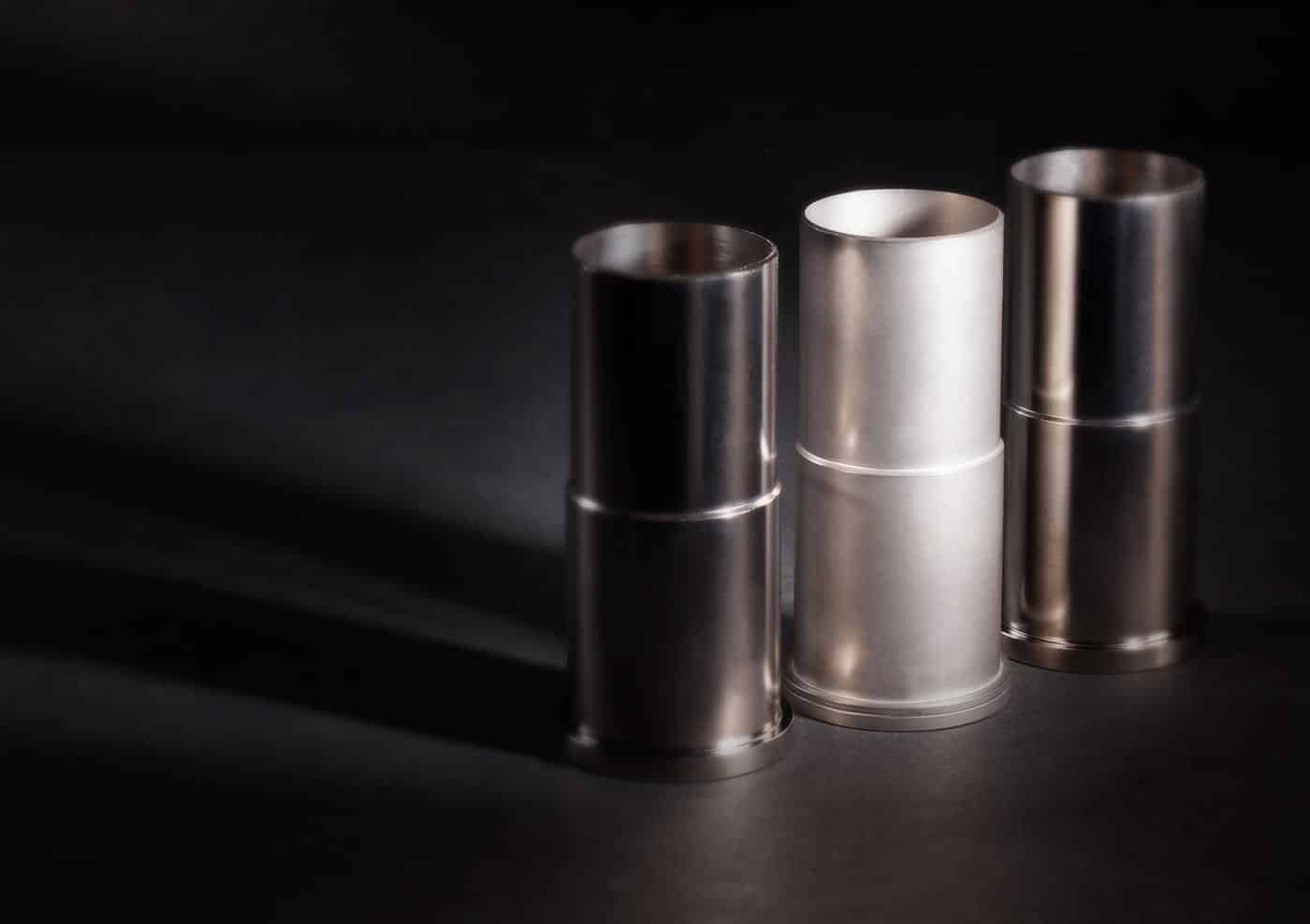
Electroless Nickel with Teflon
Electroless Nickel with Teflon is ideal for plastic mold applications that require the highest degree of release and/or produce corrosive gassing, but have less than 20% glass filler. By suspending the Teflon particles in the nickel solution, the mold release agent runs through the structure so its benefits remain until the coating is worn away. The product is designed to provide a high quality composite coating. This deposit is hard, ductile and has excellent friction characteristics. The Teflon particles have a nominal diameter of 0.4 micron and are uniformly distributed throughout the nickel phosphorus matrix. Unlike impregnated or topical coatings, as this composite coating is worn, a constant supply of new Teflon particles is exposed, maintaining a low coefficient of friction and excellent release characteristics. The Electroless Nickel/Teflon composite coating may be heat treated to either harden the electroless nickel and further improve its wear resistance, or to sinter the Teflon and produce a glazed, anti-stick surface.
Electroless Nickel with Silicone Carbide
Electroless Nickel with Silicon Carbide is an innovative solution for carbide integration using Silicon Carbide particles. When this is added to an EN mix, wear resistance is increased and uniform deposition is achieved.